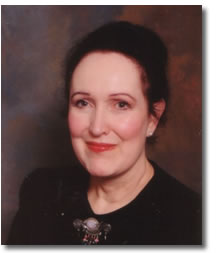
"Tradition? The only good traditions are food traditions. The rest are repressive."


"There are two ways to think. The first is to trust to your ancestors, your religious leaders, or your charismatic professors. The second is to question, to challenge, to explore history for meanings, and to analyze issues. This latter is called Critical Thinking, and it is this that is the mission of my web site. "


Dr. Laina Farhat-Holzman  

May 13, 2008

Anglo-Saxon Power Has Greatly Benefited the World

Pajaronian May 19, 2008

Americans have been an enormous global power since the end of World War II and the single most powerful since the collapse of the Soviet empire in 1991. However, it makes many of us uncomfortable. We do not like to think of ourselves as “empire,” particularly since in so many important respects, we do not behave as previous great imperial powers have.

However, a few books have come out in recent years that explore the origins of our power and one—Michael Mandelbaum’s The Case for Goliath: How America Acts as the World’s Government in the 21st Century, indeed makes a strong case that the US functions as a substitute to what would be a world government if there really were such an institution. The world would be much more tumultuous without us.

Walter Russell Meade (God and Gold: Britain, America, and the Making of the Modern World ) argues even further—tracing it back to the British, who created a naval power that spanned the globe, supporting both its imperial holdings as well as paving the way toward the international system we have today. Meade traces the unique decisions of the British, particularly after defeating Napoleon early in the 19th century, to create a surprisingly peaceful international order and with the decline of the British as a global power, the other Anglo-Saxon power, the United States, took up the standard.

Meade looks back to the British experience with the religious wars that paralyzed Europe for two centuries and shows that the British made several decisions that changed the world thereafter. They decided that state support for a specific religion must be loose enough to permit increasing toleration of other religions; they limited the power of an absolute monarch, executing one and exiling another, until power—particularly monetary power-- was transferred to an elected parliament. They decided that land wars in Europe were a drain on the British economy, and instead concentrated on far-reaching naval power.

The United States is a spawn of the British system, and the development of a two-ocean naval power has served us as well as it did the prior British system. Furthermore, with the exception of our brief imperial adventure in the Philippines, which we voluntarily ended in 1946, we have not sought empire. We have no taste for imperial occupation, as observers of our 2008 presidential election campaign can testify.

Our naval power has protected and spawned the greatest economic expansions of economies around the world—and the greatest eroding of poverty that the world has ever know. We have seen the extraordinary rise of Asia that continues under the umbrella of the Pax Americana naval power. And before that, Europe, for centuries a continual battleground, has enjoyed 60 years of unprecedented peace and prosperity. Because of our protection, the Europeans were able to devote the majority of their economies to the social programs enjoyed by the enormous European middle Class.

Meade explores another issue: the Anglo-Saxon powers have never lost a war. He writes: “Since the Glorious Revolution of 1688 that established parliamentary and Protestant rule in Britain, the Anglo-Americans have been on the winning side in every major international conflict. The War of the League of Augsburg, the War of the Spanish Succession, the War of the Austrian Succession, the Seven Years’ War, the American Revolution (Britain lost, but America won), the French revolutionary and Napoleonic wars, World War I, World War II, and the Cold War: these are the wars that made the modern world, and either the British or the Americans or both …. have won every one of them. More than three hundred years of unbroken victory in major wars with great powers: it begins to look almost like a pattern.”

But Meade cautions that we are going through a period of self-doubt, spurred by the emergence of other economic giants who may, in the future, challenge and perhaps supplant us. He does not hazard a guess of how this will end, but for the immediate future, the Anglo-Saxon powers, particularly the United States, will continue to dominate and protect global security.

683 words

Dr. Laina Farhat-Holzman is a historian, lecturer, and author. You may contact her at Lfarhat102@aol.com or www.globalthink.net.

May 12, 2008

They Who Rule Women Rule the World

Santa Cruz Sentinel May 10, 2008

From antiquity, those who organized societies, religions, and cults knew that they must have total control over women -- the childbearers -- if they are to have a future. From the advent of agriculture, which produced sufficient wealth to support civilization, women and children became the valuable property of the group’s leadership.

Women were controlled by force (beating when uncooperative), by brainwashing (“religious” indoctrination), and through repeated impregnation until they were either worn out or dead. It is difficult for us in the developed world to imagine what this horror was like until we are confronted by contemporary aberrations such as the fundamentalist Mormon cult in Texas. Each day, worse details come out of that gulag, run by delusional men who think of themselves as gods. Unfortunately, this is not a unique case, but has tendrils and roots elsewhere.

Time Magazine May 5, 2008, proclaimed the raid on this polygamist sect as “tension between religion and the law.” This is a politically correct piece of nonsense! By dwelling on the “separation of children from mothers, ” they ignore the real issues: violent sexual abuse of girl and boy children and the brainwashing of women, who seem to be demonstrating a Stockholm Syndrome, trying to protect their jailors.

The authorities cannot figure out who are the parents of these children, not only because the mothers and children are uncooperative, but because the incest is so convoluted that it would take a flowchart to begin to unscramble the mess. Each day, there is more information released about not only pregnant early teen girls, but boys with badly healed broken bones and some indication of sexual abuse as well. And why not? When a handful of cult leaders have the power to do exactly as they like, they do it.

The New Mexico police have just removed three children from another cult compound, run by “church leader” Wayne Bent, who says God anointed him messiah. Religious freedom does not trump human rights abuses and the devastating of children.

In Iran, another country run by a theocratic mafia, has, since its revolution, reduced the status of women from that of full citizen to “protected” property. The authorities do great battle against anything that smacks of feminism, such as their latest campaign against clothing that reveals too much and toys such as the Barbie Doll that will "infect" girl children with western values. Young women accused of adultery or fornication can be punished by whipping or, in some out-of- sight villages, execution. There are pictures on the web of these executions.

Finally, there is the bizarre case of the sterling citizen in Amstetten, Austria, who kept his daughter locked up for 24 years in a dungeon, raping and impregnating her seven times. Nobody knew anything, eh? How did he manage to bring food there without being noticed? Or clothing for his daughter and the three of the children locked up with her? Who delivered these babies? Who emptied the trash? I find this as unbelievable as those people who lived downwind of the concentration camp furnaces who knew nothing about what was going on. It doesn’t compute.

The real question is how could a modern Austrian man think that enslaving his daughter was his right? Why is enslavement of women still so tempting to the sociopaths among us?

A message to you troglodytes of a hideous past: modern countries treat their women as fellow citizens. And the police arresting them and sometimes women judges trying them deserve our support. This kind of “freedom of religion” does not warrant sympathy.

Perhaps one solution is to elect more women to government, along with the good men who believe in the equal partnership of men and women. Then throwbacks to antiquity might take note that they will no longer have a free reign. And somebody needs to teach these girls living in the boonies that they are human, not baby factories or handmaidens. The work of creating a just world is not finished yet.

662 words Dr. Laina Farhat-Holzman is a historian, lecturer, and author. You may contact her at Lfarhat102@aol.com or www.globalthink.net.

May 4, 2008

A Visit to the Land of the Godfather—Sicily

Pajaronian May 12, 2008

As a little girl in Rochester, New York, I learned that we had more Sicilians living in our town than anywhere outside of Sicily. I liked my Sicilian-American schoolmates, and recall having a great crush on one of them in 8th grade. Now, many decades later, I have visited this, the largest island in the Mediterranean, and the locus of much important history. Its 20th century history, of course, made an indelible mark on American culture, primarily by way of the movie industry. The Godfather trilogy has become an American icon around the world.

Sicily, like its neighbor Malta, had human beings living there in Neolithic times. What happened to them we do not know, but their remains are being unearthed. But Sicily’s history begins with two groups competing for land there, the Greeks sending out colonies to the eastern part of the island (733 BC) and the Phoenicians to the west at the same time. The Sicilian Greeks and Phoenicians fought, and the Greeks prevailed, wiping out whole Phoenician cities. In short order, the Romans conquered Greece and its Sicilian province, and from then to today, Italians have more or less been the dominant power.

Sicily’s entire history can be characterized by conquest—they have never been able to defend themselves—and their wealth in agriculture was a great temptation to invaders. Sicily was a breadbasket for Rome. The poor peasants (at one time slaves) labored and their landowners collected, paying off the latest conquerors. This system is, of course, feudalism, and the remnant of this is the notorious Mafia, which initially offered protection in return for payment. Today the protection is not there, but “protection money” is. Sicily and southern Italy are currently in the process of closing down this last, and nastiest feudal institution.

It is said that Sicily is a cultural extension of North Africa; it is certainly closer to Africa than to Milan. Sicily was conquered and ruled by Arabs from 827-1072, with mixed results. Under good rulers, Sicily prospered; the Arabs introduced new and valuable crops (citrus, sugar, cotton) and Persian irrigation systems; they also sent in thousands of Muslim colonists and converted many Sicilians by making them an offer they couldn’t refuse—tax relief if they converted. During this period, Sicily suffered under some dreadful rulers as well—some of them Shiites from Egypt, never a happy experience. But in 1072, the Normans, Vikings from the North, conquered the country and established rule. This was one of the launching sites for the First Crusade of 1096. The most famous Norman ruler was Roger II, who was so impressed by Muslim institutions that although a Christian (of sorts), he maintained a Muslim court, spoke Arabic, and mandated tolerance of his Muslim citizens.

This, of course, changed as the conflicts between Christianity and Islam grew more fierce. Later Christian rulers forced conversion on the Muslims and Jews in the island and the brief period of tolerance was over. Palermo (which I did not visit) was famous during its Muslim period for having over 600 mosques and public gardens. I understand that most of these were converted into churches, but Muslim style can still be seen. I have been told that the Christian cemetery in Palermo has many graves marked with family names such as Cohen and Levi, indicating that Jews were “made an offer they could not refuse.”

Despite the painful Muslim conquest and Christian reconquest, Sicily still reflects the Muslim period in its food—a taste for sweets, lemons, almonds, and elegant desserts. Place names and words in the Sicilian dialect also reflect the Muslim period.

My visits took me to Siracusa (Syracuse), the beautiful first city founded by the Greeks. It is still very beautiful—with the lovely earthy pastels favored by people in the Mediterranean. The sea is blue and fishermen bring in the most beautiful fish every morning, a favorite food of Siracusans. We ate swordfish almost every day, and saw silver little tunas (tonnitas) in the fish market, along with every sort of squid, octopus, and shellfish. I longed to cook them.

One of the most splendid examples of Greek temples in the world can be seen in Agrigento, built in the 6th century BC, and still in perfect preservation. This Valley of the Temples had structures dedicatd to Hera, fertility goddesses, Herakles, and Zeus. The ancient Greeks had a most amazing sense of aesthetics; the site is breathtakingly beautiful.

Our last day was spent as if we were ancient Romans on holiday, in Taormina, a splendid medieval town on the top of a cliff dominating the Ionic Sea and Mt. Etna, a very much alive volcano. This town is mélange of Greek, Roman, and medieval. A perfectly preserved Greek theater is carved into a hillside—with all the Roman “improvements” (big, not beautiful). This is the archetypal resort—attracting tourists from antiquity to now.

Sicily today is looking wonderful; prosperity is showing, and there seems to be an eruption of industry and a very important oil refinery. Unlike the rest of Italy, Sicily seems to be having children in at least replacement numbers. It felt like a happy place—happier than it has been in centuries.

867 words

Laina Farhat-Holzman is a historian, lecturer, and author. You may contact her at Lfarhat102@aol.com or www.globalthink.net.


The Maltese Falcon Lives!

Pajaronian May 6, 2008

How many of us remember the Humphrey Bogart movie, The Maltese Falcon? And how many more know Maltese cats and dogs? But aside from those cultural artifacts, Malta, a small group of three islands in the middle of the Mediterranean, is a place of mystery. I went to have a look, and found it fascinating.

Malta has several exceptional qualities: it was home to the earliest European human settlements and has several amazing Neolithic temples in almost perfect preservation. It also had an enormously important medieval history. Malta has been inhabited since around 5200 BC and a significant pre-historic civilization existed on the islands before the arrival of the Phoenicians and the Greeks, who named the island Melite, meaning "honey sweet." This makes the temples older than the Egyptian pyramids and much older than England’s Stonehenge.

From Crusade times (1096 AD), it was ruled by a powerful monastic order, the Knights of St. John (Knights of Malta), an order parallel to the Templar order, militant monks who protected Christian pilgrims to the Holy Land. The Knights Templar were wiped out in 1307 by order of the Pope and French King, motivated by the opportunity to seize enormous wealth and remove political competition. The Knights of Malta were more fortunate. They had a dual mission of establishing hospitals and fighting Muslims. They still exist, and are an international power of sorts. We visited the Grand Master’s Palace and the medieval Cathedral, both with wonderful views of the harbor below—and both on the military high ground. We also visited the Inquisitor’s Palace, and were told by our guide that Malta’s Grand Inquisitor was gentler than Spain’s. I cannot imagine a gentle inquisitor, somehow!

The town of Valetta is a UNESCO World Heritage site that demonstrates why Malta has been so important in European history since its beginnings. The Island group comprise one giant harbor for shipping—both a blessing and the reason for its occupation by so many military powers. It is the closest European country to Africa, which has contributed to both its Muslim conquest in 870 AD and its important role during the Crusades (1098-1250). A Norman King conquered the country from the Muslims, but found the technology and governance worth adopting. His Christian court even spoke Arabic and used Arabic coinage. Islamic governance and Christian governance were tolerant only when powerful leaders mandated it.

During the Middle Ages and Renaissance, the country was conquered by Byzantines, Italians, French, under constant attack by Ottoman Turks, and ultimately the British. The French, under Napoleon, abolished the Knights of Malta order and alienated and looted the country—a process reversed by the British, who held it from that time until 1946.

This island group is today the only independent country in the Mediterranean. All other islands (Sicily, Corsica, Sardinia) are provinces of other countries. Malta became an independent country in 1946, freed by its last colonial protector—Great Britain. The Maltese, who speak an ancient Phoenician language, wisely decided to adopt English as a second official language and educate everyone to speak both Maltese and English. This decision has enabled them to have all the benefits of English speakers—including a modernizing economy that is serving them well.

Malta has recently been admitted into the European Union, and is struggling to make the reforms to their laws demanded by the EU. They have not yet permitted abortion or divorce, contentious issues, but have adopted many of the “Nanny State” provisions, such as providing stipends to university students, along with free education. They also have a national health service, confronted by the diseases common to an inbred population—diabetes, obesity, and genetic anomalies. They also have the greatest population density of any European country. What this means is that they are having a hard time funding these benefits, yet once funded, the voting public refuses to cut back.

And like other EU countries, they are finding their fertility rate collapsing. Modern young adults are delaying childbearing or are having only one. Although Malta is 96% Catholic, churchgoing has declined to 50 percent; much above the rest of Europe is 15 percent. To address their population decline, they are inviting Maltese exiles and retirees to return to Malta, which many are doing. They are also expanding their economy from tourism to a growing electronics industry and other small manufacturing (English education is a great benefit to attracting investment). However, the flood of illegal African immigrants is not being welcomed into Malta; they jail and deport them.

Visiting this strange and unique country is like a virtual trip through a time machine—where much of the world’s history is visible in layers at the same time. The Maltese are proud of their country and let you know it.

794 words Dr. Laina Farhat-Holzman is a historian, lecturer, and author of Strange Birds from Zoroaster’s Nest and God’s Law or Man’s Law. You may contact her at Lfarhat102@aol.com or visit her website at www.globalthink.net.

May 1, 2008

Religions Are Gaining and Losing Numbers

Pajaronian April 28, 2008

We tend to think of people being conservative about leaving the faith of their childhood. However, there have been times in history that a religion gained—or lost—large numbers. Apparently Islam is in such a period of growth, but at the same time exodus of the disgruntled.

During the later years of the Roman Empire, millions of people abandoned the polytheistic state religion and converted to new competing religions: Mithraism, Judaism, and the young Jewish cult of Christianity. This free marketplace of religion ended with the accession of Emperor Constantine, who mandated Christianity as the only tolerated faith and all others to be persecuted.

Islam began as a small cult that succeeded beyond all expectations because the powerful empires of the day (Persia and Byzantium) were weakened by long, expensive conflict. The Arabs unexpectedly swept over formerly Roman Christian and Jewish North Africa and forced mass conversion. The same was true for the conquest of Persia and across Central Asia, where the Zoroastrians, Buddhists, and Hindus were persecuted.

After a thousand-year monopoly, the conversion of masses of people from the Catholic Church to dissenting sects (Protestants) was the consequence of political ferment in Europe and the advent of the printing press, which broke the monopoly of Catholic learning.

For the modern Western world, over a 400-year period, religion has lost the arm of state compulsion. Most of us today are free to believe, not believe, or shop around for a faith that suits us. We certainly do this in the United States; religion is a marketplace.

But what of Islam, which advertises itself as the world’s fastest growing faith? It may well be that it is also entering into a phase of losing followers disgusted with its current phase of militant fundamentalism and bigotry. This defection is particularly brave in countries with Muslim governments that execute defectors (apostates). The following are some numbers on this phenomenon, provided by Andrew Walden, Editor of the Hawai`i Free Press in Hilo, Hawaii (andrewwalden@email.com).

• Italian Ex-Muslim Magdi Allam's very public baptism by Pope Benedict on Easter Sunday made headlines. According to Walden, he is not an anomaly. He says that Muslims are leaving Islam in droves. The baptism of Allam was an act of defiance in the face of Islamic threats, among them threats by Osama bin Laden.

• In Africa, Islam used to represent Africa’s main religion and there were 30 African languages written in Arabic script. The number of Muslims in Africa has diminished to 316 million (out of a population of almost 1 billion), half of whom are Arabs in North Africa. (See Ahmad al-Qataani, Interviewed by al-Jazeera in 2006.)

• In Iran as many as 1 million people have surreptitiously converted to Evangelical Christianity in the last five years, according to Pastor Hormoz Shariat (Google him), who claims to have converted 50,000 of them through his U.S.-based Farsi-language satellite ministry. The Iranian parliament is debating the death penalty for conversion.

• In Iraq, a similar phenomenon is growing. The New York Times March 4 reports: “After almost five years of war, many young people in Iraq, exhausted by constant firsthand exposure to the violence of religious extremism, say they have grown disillusioned with religious leaders and skeptical of the faith that they preach.”

• In southern Russia the same pattern is emerging. According to Roman Silantyev, executive secretary of the Inter-religious Council in Russia, two million Muslims converted to Christianity. As many as 100,000 have converted to Christianity in post-Soviet Kyrgyzstan.

• In Kashmir, victim of Islamist war, evangelicals report thousands of sub-rosa converts. An Indian newspaper headline reads: “Urban Muslim Youth Out to Junk Faith.”

• Palestinians, after decades of terrorist rule, are being quietly converted, holding in-home services to avoid detection. Says one evangelist: “I’ve been working among these people for thirty years, and I promise you I’ve never seen anything like this.”

• The London Times estimates 15% of Muslims living in Western Europe have left Islam — 200,000 in the UK alone. Those who leave often face harassment, threats, and attack, but they are leaving.

This seems to be another era of religious defections in the face of very ugly religious warfare. We have been there before.

703 words

Laina Farhat-Holzman is a historian, lecturer, and author. You may contact her at Lfarhat102@aol.com or www.globalthink.net.


The Marriage of State and Religion Damages Both

Santa Cruz Sentinel May 3, 2008

After several hundred years of religious wars, founding fathers of the United States made a decision that the state must not promote a state religion. As a result, we have a marketplace of all sorts of religions (and non-religions) who cannot force their beliefs on the unwilling. This decision had roots traceable to early Christianity when Jesus urged “then render unto Caesar that which is Caesar’s and unto God that which is His.” This separated faith from state power, a tradition that was both followed and quarreled over by European kings and Catholic popes until the Reformation.

The one exception to this was the Roman emperor Constantine (312 A.D.), who converted to Christianity and decreed it the only tolerated state faith. Christianity gave him legitimacy and he gave it muscle. Constantine’s action became the model for eastern orthodox Christianity in which the emperor (and later czars of Russia) had total control over the religion, creating a tyrannical state and an ossified religion. It was not good for either institution.

Islam did not believe in rendering unto Cesar; instead, the Prophet Mohammad was both spiritual leader and military head of state. This mixed mission was passed on to the first Caliphs who ruled early Islam, and it served them well in their mission of conquering much of the known world. But from the start, the marriage of faith and state did not go well. The Caliphs of Baghdad were not always spiritual beings appropriate for governing a religion; they were often corrupt, irreligious, and few of them died in bed of old age.

Later as Islam spread across the world, national differences played a role; absolute monarchs ruled as they always have, using religion to pacify the masses. Some of those rulers were responsible for the great Golden Age of Islam because they invited talent—whether Muslim or not—to come to their capitals and enrich the culture. Out of this came the great period of Spanish Islam, the revival of Persia, Moghul India, Ottoman Turkey, and tolerant early Indonesia. Muslim clerics have never been moderate, but Muslim rulers sometimes have.

Today, Islam is wrestling with the idea of separation of state and religion and some are revisiting the model of the Prophet Mohammad and the early Caliphs. Militant Islamists, who want to recreate their highly romanticized notion of early Islam are promoting not only eliminating nation states, but of having a global Muslim world in which nonbelievers will be taxed and “invited” to convert. They dream of restoring the Caliphate, but have not agreed yet on how they would select such a leader.

Fortunately for Islam, a reformation is going on—its leaders persecuted and threatened, but nonetheless making strides (see Christian Science Monitor, April 2, 2008.) Abdullah Ahmed an-Naim, a Sudanese self-described “Muslim heretic,” has condemned the notion of an Islamic state. He claims that only a secular state can provide the human rights essential to protect Muslims and people of other faiths (or non-faiths) to practice their beliefs freely. “I need the state to e neutral about religious doctrine so that I can be the Muslim I choose to be,” said this Emory University law professor. With this view in mind, he helped to organize the first “Muslim Heretics Conference” which was held to discuss such issues as Sharia (Islamic law), democracy, women’s rights, and coping with dissent.

Naim certainly has had experience with being jailed in a very nasty Islamist regime, Sudan. In 1983, Sudan fell into the hands of a dictator who replaced civil law with the Sharia. He jailed and killed dissidents, one of whom was a Sufi (mystical) Muslim thinker who believed that certain verses from the Koran were universal truths whereas others were relevant only to a particular historic context and no longer viable.

Naim has a growing following, among them Radwan Masmoudi, director of the Center for the Study of Islam and Democracy in Washington. He believes that separating political and religious institutions is what most Muslims today really want. They have not had a spokesman like this before. It is time.

660 words

Dr. Laina Farhat-Holzman is a historian, lecturer, and author. You may contact her at Lfarhat102@aol.com or www.globalthink.net.

April 27, 2008

Oil’s Slippery Slope

Santa Cruz Sentinel April 19, 2008

Petroleum has had a good century and a half run, but it is obviously beginning to lose out as the world’s primary fuel energy source. We have all benefited from having an (until now) inexpensive fuel for our automobiles, airplanes, and ships, particularly important in winning World War II, the first war in which the winner would be the country with oil. Neither the Nazis nor the Japanese had domestic sources, therefore their first task was to seize other countries’ oil fields. Neither was able to win before their petroleum ran out. After World War II, the world benefited from inexpensive petroleum. In the US, the automobile and the freedom it provided was available to nearly everybody. The same was true in Europe and Japan, a phenomenon not possible before the war. But good things often have not-so-good underbellies:

• Smog. Burning hydrocarbons in large quantities fouls the air. In the 19th century, coal produced the nasty yellow air that sickened and periodically killed Londoners and residents of Pittsburgh, Pennsylvania. Now it is petroleum that does damage to lungs, particularly of children.

• International Relations. The United States no longer depends upon its own considerable petroleum resources, but finds it more economically feasible to get it from underdeveloped countries. We have enjoyed a long run doing this—a benefit to our economy and to autocratic rulers in what were once stable countries. This appeared to be a win-win for both us and those rulers. But this picture has also changed. Iran. The late Shah of Iran used the bounty from oil revenues to kick-start modernization programs which initially co-opted his left-wing critics but ultimately destabilized his country, The Islamists who took him down now preside over a huge revenue, but the golden goose is dying from neglect and poor maintenance. They cannot even refine their own oil and depend upon imports and rationing.

Saudi Arabia. The US developed the Saudi oil industry and in a 50/50 partnership, made it one of the most lucrative and productive in the world. However, being the most fanatical of fundamentalist Muslim states, the ruling family uses that money to enrich itself, buy off potential rivals, and launch a worldwide missionary campaign to bring Muslims back into strict observance and to revive early Islam’s violent campaign for world conquest. They are the paymasters for much of the destabilization and terrorism around the world today, but are barely able to internally control the monster they created.

• Blessing or Curse? Many other developing countries have found oil recently. Unfortunately for them, the oil revenue proves to be a curse. Rulers use the money to build a military strong enough to keep the population in line and neglect other sources of income because oil is enough. This industry has proven to be a disaster them all—with the sole exception of the North Sea oil countries (primarily UK and Norway) for whom this income was not corrupting.

Russia. Russia is a modern state, but since the fall of communism, they have not done the heavy lifting of revamping their industries and economy. Their swollen oil revenues will not last, and when it goes, they have nothing to replace it. Bad policy.

Venezuela. Populist demagogue Hugo Chavez has used currently huge revenues to promote himself. His initial good works on behalf of his citizens (universal health and education) have been followed by international notoriety and alienation of his main customer, the United States. Despite his radical rhetoric, he knows that he cannot afford to deprive the US of oil. Alienating the US is bad for the pocketbook, and then some!

• The End of Oil. According to John Hofmeister, President of Shell Oil, we will not be through with oil for at least a generation. We will be drilling our own again, and the oil companies are already investing heavily in alternate energy. But, he says, we need a bipartisan national energy security program now. Solving energy security will take leadership and bipartisan work.

665 words

Laina Farhat-Holzman is a historian, lecturer, and author. You may contact her at Lfarhat102@aol.com or www.globalthink.net.


Population Sizes and Counting

April 26, 2008

We all know that our national census process is used as a mandated ten-year count of how many of us there are. We need the raw numbers to determine congressional representation and the other specific statistics to help those representatives determine needed legislation to keep us healthy and economically competitive. This is, of course, an idealistic definition of demographics. The more pragmatic uses include knowing how many people fall into certain age groups or education groups (useful to product and service marketers) and numbers needed for long-range planning. If the birthrate declines, for example, there will be less attention to school-age needs and probably more to the needs of senior citizens.

Although we take the census seriously, we undoubtedly miss counting those who are living illegally five families to a house or those homeless living in the streets. But for most purposes, our census taking is close to the mark.

The United Nations also does a great deal of work with numbers, as important to their programs as to our own. However, they depend upon member governments to provide the statistics, and plenty of those governments cook the books. Many provide what they like to the UN, as they notoriously did during the first Gulf War, when the exaggerated population statistics provided by Saddam Hussein and his arch enemy, the Saudis, grew daily. They were using numbers to intimidate, not to illuminate.

As flawed as the UN collection process is, there are some interesting charts available that speculate on global trends. One chart ranks countries by population, comparing their rankings in 1950, 2005, and 2050. This is a very ambitious estimate, and suffers with other attempts to assess the future, that unexpected events may intervene, making their guesses moot. Nonetheless, projecting from what they know today, they think:

Rank in 1950 2005 2050

China 1 1 2

India 2 2 1

USA 3 3 3

Russia 4 7 17

Japan 5 10 16

Germany 7 14 22

France 11 20 Off the chart

Italy 20 22 Off the chart

Spain 16 Off the chart

Nigeria 15 9 6

Pakistan 14 6 4

Bangladesh 12 8 8

The rest of the numbers and ranking show developed countries everywhere in Europe melting, their populations failing to produce even the 2.1 fertility rate that would keep them stable. Meanwhile, countries having serious problems caring for the populations they already have are proliferating.

Before we get too depressed by these projections, however, I would suggest that some things are not being considered:

• Voluntary and involuntary fertility rate reductions are already happening. • Concerns about one or more global epidemics are real. • India’s and China’s huge populations are being confronted with ecological devastation and shortages of water, which will reduce their populations. • World poverty reduction has already reduced some birthrates. • Limits to food, potable water, and energy sources will reduce such countries as Nigeria, Chad, Ethiopia, and Congo; internal war, unfortunately, will do the rest. • Climate change—either warming or chilling—will devastate countries such as Bangladesh, or marginal states in the Himalayas and the Andes. • Psychological changes in Europe may reverse the meltdown of population. Ireland is already leading in this direction.

Human populations have declined and burgeoned from the beginning of our identity as human. We are all descended from one small band of human beings who left Africa during a period when some global disaster wiped out most primates. They peopled the world and survived a long ice age. They flourished after developing agriculture, trade, and the beginnings of city-states and became the dominant species on the planet. They have survived wars, plagues, little ice ages, and the danger of nuclear warfare.

Nobody can really predict the future with any certainty; therefore I am free to hope that we have the intelligence—when pressed—to survive.

641 words

Dr. Laina Farhat-Holzman is a historian, lecturer, and author. You may contact her at Lfarhat102@aol.com or www.globalthink.net.